
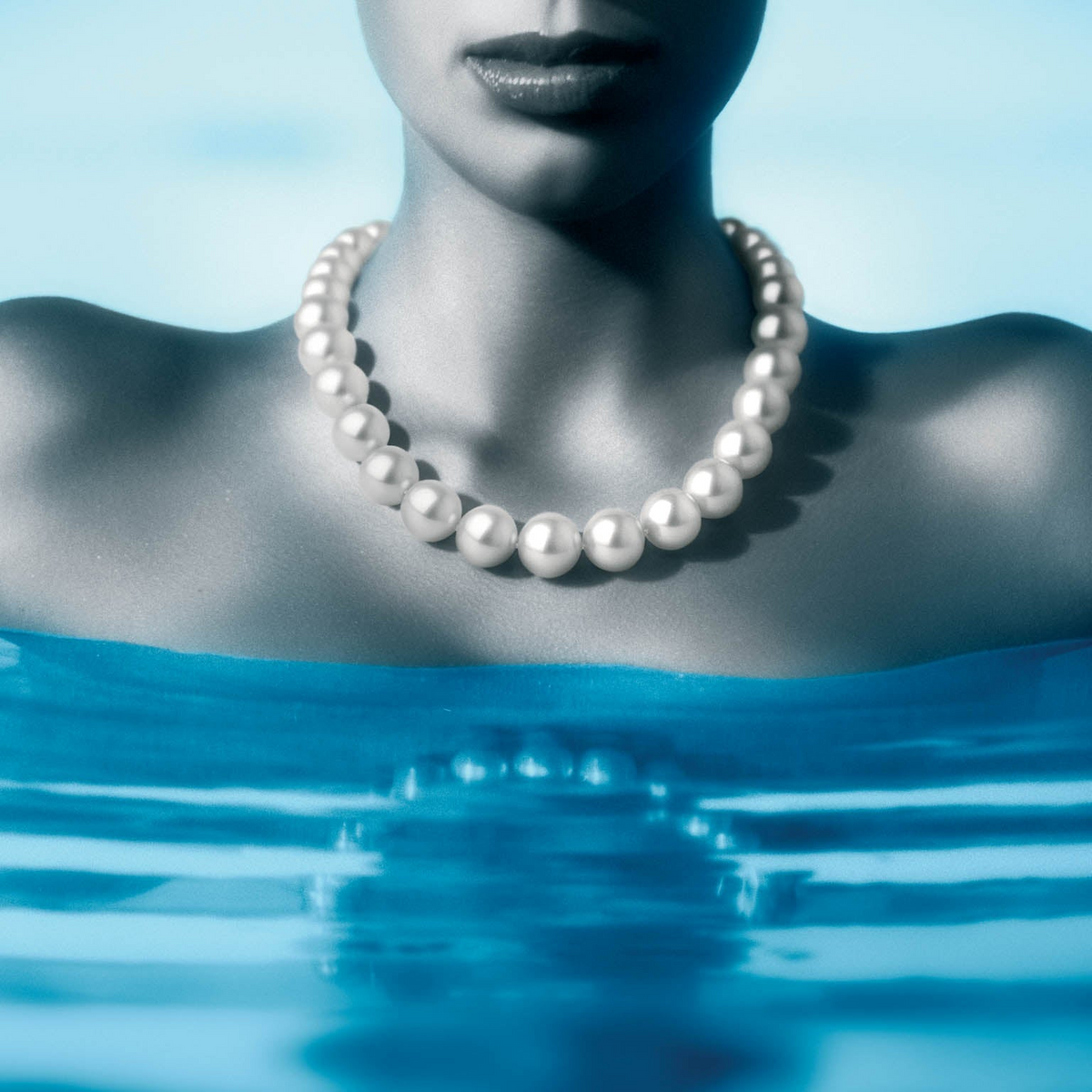
Of all the pearls across the globe, one is more rare and revered than any other. The South Sea pearl is known as the queen of all pearls, prized for its size, its lustre and the years of patience it takes to grow.
Born in the Pinctada maxima
The South Sea pearl grows in the Pinctada maxima oyster, the largest and rarest of all pearl-producing oysters. Commonly known as the silver or gold lip, it is native to the pristine waters of Australia and Indonesia, where The AUTORE Group farms. The Pinctada maxima produces a spectrum of shades from white to golden.
Inside its host oyster, a South Sea pearl spends two silent years taking shape, in waters where the temperature is gentle and the environment nurturing.
Rare, large and unrivalled in lustre
South Sea pearls command a premium for their size, lustre and quality. They are known to have the thickest average nacre of all cultured pearls, and with it, an unparalleled lustre.
- Size: South Sea pearls range from 8 to more than 20 millimetres, with the majority between 9 and 15 millimetres. Pearls above 15 millimetres are incredibly rare.
- Lustre: the thick layers of nacre give each pearl its deep inner glow.
- Individuality: as an organic gemstone, no two pearls are ever the same.
A symbol of good fortune
Historically a symbol of fortune, protection, wealth and longevity, the South Sea pearl has been revered as a good luck charm across the globe. Its most powerful virtue is its inner glow.
From our own farms
AUTORE sources every White and Gold South Sea pearl used in its jewellery from our own farms in the crystal-clear waters of Australia and Indonesia, from Broome and East Arnhem Land to Lombok, Sumbawa and West Java. Because we own every stage, we choose the finest pearls from every harvest.
Discover more about the South Sea pearl, explore our farms, or learn how every pearl is graded with the AUTORE Five S's™.